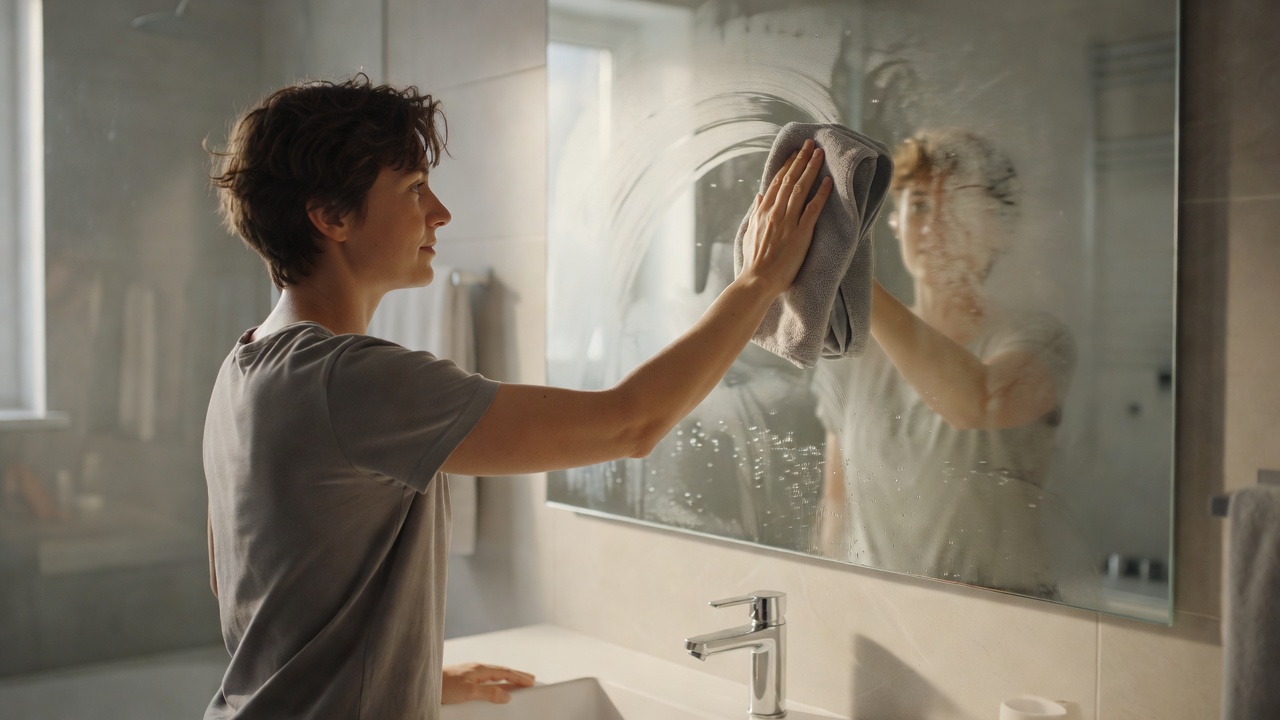
One-wipe thinking
Scrubbing is what you do when a surface was left alone for too long, or the wrong tool met the wrong dirt. The lazy approach is to keep dirt light and use tools that lift it rather than push it around. Do that and one pass is usually enough.
Start with the cloth
A decent microfibre cloth is the best-value item in any cleaning cupboard. The split fibres grab dust and grease, so on many surfaces plain water does most of the work. Brands such as e-cloth sell cloths designed for this, and ordinary supermarket multipacks perform well too. Two rules keep them working: wash them without fabric softener, which coats the fibres, and skip the bleach. Keep a few on rotation so a clean one is always within reach.
Melamine foam for stubborn marks
Mr. Clean's Magic Eraser made melamine foam famous. It acts like very fine sandpaper, which is why it lifts scuffs, crayon and soap scum with water alone. It is also why you should test it first. Avoid it on glossy or polished finishes, matte paint, and non-stick pans, where it can dull or wear the surface. Wet it, squeeze it, wipe once, rinse.
The squeegee habit
A squeegee, such as the common OXO Good Grips model, takes thirty seconds after a shower. It clears water before it dries into limescale, especially in hard-water areas, so you never need to scrub the glass. Keep it on a hook inside the shower so there is no excuse. A daily shower spray from brands like Method adds a second layer of defence.
Let the chemistry work
Cleaning products need time on the surface. That is called dwell time, and it replaces elbow grease. Spray, walk away for a few minutes, then wipe. For disinfectants, follow the contact time on the label. Registered products in the United States, for example, list the time needed on the label because a quick wipe will not necessarily kill germs. Most daily mess just needs soap and a wipe. Save disinfectant for raw meat spills, toilets and bins.
The one-pass kitchen counter
- Clear: move everything that isn't a permanent resident.
- Spray: a light mist of all-purpose cleaner, such as Mrs. Meyer's or Method.
- Fold: a cloth in quarters gives you eight clean faces.
- Wipe: in an S-shape from back to front, then flip the cloth for the edge.
Wipe stainless steel along the grain. For dry floors, a Swiffer-style sweeper picks up dust faster than a broom, and your robot will handle the rest.
What not to do
Never mix bleach with ammonia or acids such as vinegar. The result can be toxic gas. Use one product at a time and rinse between them. Vinegar is also a poor choice on natural stone, such as marble, granite or limestone, because acid can etch it. Check the care instructions for your worktops.
The toilet, briefly
In-bowl gels and tablets help between cleans, but they do not replace a brush. Sixty seconds with a brush once a week keeps limescale and stains from getting serious. It is the least glamorous minute of your week, but it replaces an hour of rescue scrubbing later.