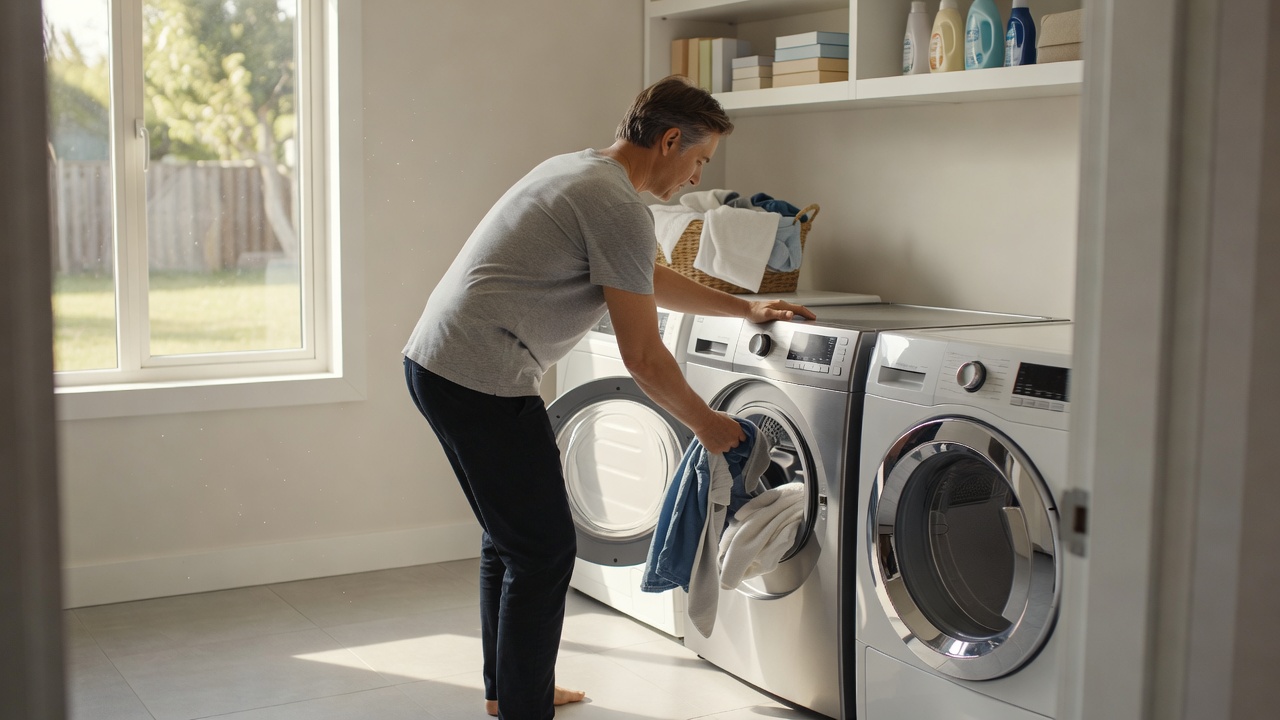
Sort at the hamper, not at the machine
The laziest laundry system is two baskets, lights and darks, so sorting happens when you drop the clothes in. By wash day the decision is already made. Add a third bag for delicates and a mesh bag for socks and small items. Buy the same sock in bulk, and matching stops being a chore.
Read the label once
Care labels use symbols standardised under ISO 3758. Learn four of them: wash temperature, do not tumble dry, do not iron and do not bleach. That covers most disasters. Modern detergents from brands such as Ariel, Persil and Tide are formulated to work in cool water, so a 30°C cycle handles everyday loads and uses less energy. Check the packaging for the guidance on your product.
Delay start and auto-dosing
Use the delay-start button to make the machine finish just before you get home, or run at off-peak hours if you have a time-of-use tariff. Some machines go further: Bosch's i-DOS and Miele's TwinDos store detergent and measure it per load. They cost more, and most people will be fine with pods or detergent sheets, but for a busy household, never measuring detergent is a real saving of effort.
Stains: act early, scrub never
Treat marks soon, blot instead of rubbing, and use an oxygen-based booster such as OxiClean as a soak before the wash. Skip the heat of the dryer until the stain is gone, because heat sets many stains permanently.
Dryers and the art of not folding
Clean the lint filter after every load. It is the single most useful dryer habit for both efficiency and safety. Heat-pump dryers use far less energy than vented or condenser models, and the energy label, the EU rating or Energy Star in the United States, makes comparison easy. Take clothes out while they are slightly warm and hang or fold straight away, and you will iron less. Fold less too: hang shirts directly and roll underwear.
Wash less in the first place
Jeans, wool and coats rarely need washing after one wear. Air them out, spot clean, and keep the machine for the things that genuinely smell. For bedding, changing the sheets every week or two is commonly recommended, and a duvet cover with a zip or buttons is the easiest layer to swap.
The dishwasher, properly
Scrape plates but don't pre-rinse. Detergents work better with food to grip, and modern machines cope. Use all-in-one tablets such as Finish or Cascade, add rinse aid and salt if you live in a hard-water area, and clean the filter at the bottom monthly. A well-known 2004 University of Bonn study found that dishwashers generally use less water and energy than careful hand washing. Load dirty sides towards the spray, run it when full, and unload while the kettle boils so the habit sticks.